If you’re selling online in Latin America and still thinking of alternative payment methods (APMs) as a “nice-to-have,” 2026 will be an uncomfortable year. In reality, APMs already power nearly half of regional eCommerce volume — 46% in 2024, with a clear path to 51% by 2027 driven by digital wallets and account-to-account (A2A) payments.¹
What changed? Consumers did. Latin America skipped steps. Instead of moving gradually from cash to cards to mobile, many markets jumped straight to instant transfers, QR payments and wallets that feel faster, cheaper and more local than traditional card checkouts. The result is clear: higher approval rates, faster settlement, and less friction if merchants support the right methods.
For global merchants, this is both a risk and an opportunity. Ignore local payment preferences and watch carts fill and empty. Embrace them (and do it with a unified integration) and Latin America becomes one of the most scalable growth regions worldwide.
However, the challenge isn’t just “accepting” these methods, it’s an architectural shift. The era of the “redirect” is over. In a mobile-first LatAm, forcing a user out of the checkout to a third-party bank page is a conversion killer. Success now requires API-native, embedded flows where the payment feels like a feature of the merchant’s own environment, not an external hurdle.
The payment shifts that actually matter in 2026
Pix redefines “default” in Brazil
Pix is no longer an alternative, it is infrastructure. It is widely expected to represent close to half of Brazilian eCommerce transactions in the coming years.³ Its dominance isn’t driven by novelty but by performance: real-time confirmation, no card data and a frictionless UX embedded in daily life. For merchants, Pix translates into higher conversion and immediate cash flow, making it non-negotiable for Brazil-focused strategies. For merchants, this requires highly robust real-time state management. Confirming a transaction shouldn’t take seconds of “processing” screens; it requires ultra-low latency webhooks that trigger immediate fulfillment the moment the ledger clears.
Boleto bancário continues to play a complementary role for credit-averse consumers.³
Wallets and A2A become the regional backbone
At a regional level, digital wallets and A2A payments already account for roughly 46% of eCommerce volume, with projections reaching over 50% by 2027.¹ This growth is not tied to a single super-app, but to strong local ecosystems that consumers trust more than global card brands.
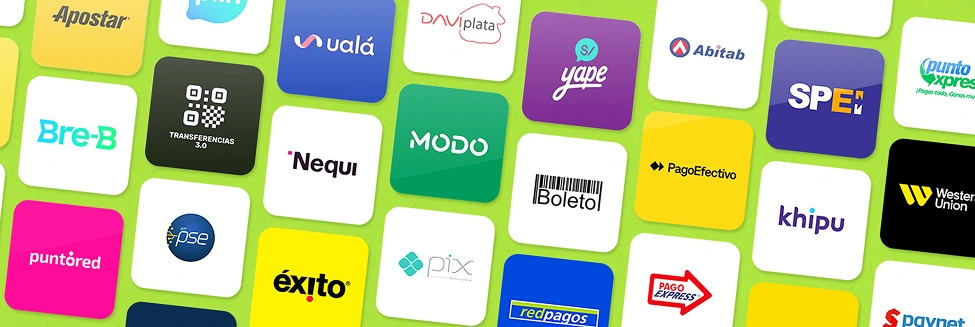
Crucially, this shift is visible not only in Brazil and Argentina, but also in Peru and Chile, where wallets and transfers increasingly mirror offline payment habits online. In practice, this means methods like Yape and PagoEfectivo in Peru, Khipu in Chile, Transferencias 3.0 in Argentina, Nequi and Bre-B in Colombia are not niche options, they are mainstream rails.¹
Behind these names lies a technical “silo” problem. Integrating dozens of different wallets means maintaining dozens of different API schemas. The solution is data normalization: a unified abstraction layer where every wallet returns the same data objects and status codes, simplifying global reconciliation.
A major technical frontier in 2026 is the evolution of APMs from one-off transactions into recurring billing engines. With the maturation of APMs, global subscription models (SaaS and Streaming) can finally scale without credit cards. This requires sophisticated consent and tokenization management to ensure that “push” payments behave like “pull” subscriptions, maintaining high retention rates without user intervention.
Real-time payments set new expectations
Latin America leads the world in real-time payment growth.² Systems such as Pix (Brazil), SPEI (Mexico), PSE + Bre-B (Colombia) and CVU Collection (Argentina) have reshaped consumer expectations: payments should be instant, transparent and final.¹
For cross-border merchants, RTP rails reduce settlement times and reconciliation complexity, but they also set a new bar for the entire customer journey. In a world where payments happen in seconds, the expectation for refunds has followed suit. Closing the gap between a return and a refund is no longer just a technical detail, it is a critical trust-builder. When the money goes back to a user as quickly as it was sent, it transforms a potential service friction into a reason for that customer to return.
BNPL: powerful, but market-specific
BNPL is not a one-size-fits-all solution in LatAm, but where it fits, it performs. Argentina leads in BNPL growth as credit constraints make installment-based purchasing attractive. In more card-mature markets like Chile, adoption is slower — reinforcing the need for selective, not blanket, deployment.
Simple, invisible, local beats global
Across markets, one pattern repeats: payments that feel simple, invisible and local outperform generic global checkouts. Wallets, transfers and direct debits continue gaining ground over card-heavy flows, particularly on mobile.¹ In 2026, localization is less about language and more about aligning with local payment behavior.
Why LatAm consumers pay differently and why U.S. checkouts often fail here
For many U.S. merchants, checkout design is built around one assumption: that customers are comfortable entering card details, absorbing small fees and trusting a global network to move their money. In Latin America, that assumption often breaks.
Across the region, consumers tend to choose payment methods that feel familiar, transparent and tied to their everyday financial behavior — even when they own credit or debit cards. Local wallets and real-time bank transfers don’t just win on speed; they win on trust. They show balances in real time, confirm payments instantly and avoid the uncertainty of foreign card rails, exchange rates, or delayed settlement.
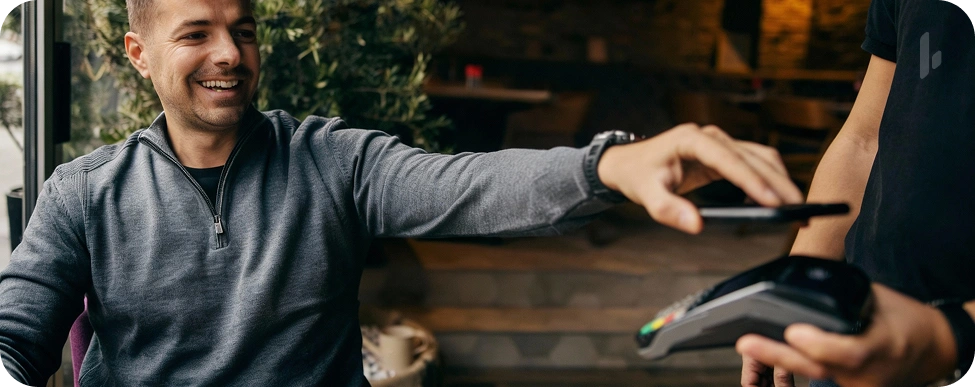
This is especially true in mobile-first contexts. A shopper paying with Pix, Yape, Nequi, Bre-b or SPEI stays inside an app they already use daily. There is no long form, no card number to type, no unexpected fee. The payment feels less like “entering a financial system” and more like sending money — which is exactly how millions of people in Latin America already move funds to friends, family and local merchants. By using lightweight SDKs and identity-linking APIs, merchants can turn a complex financial transaction into a simple “send money” action that feels native to the user’s mobile habits.
Price sensitivity reinforces this behavior. Even small or poorly understood card fees can trigger hesitation or abandonment, while local bank rails and wallets feel predictable and cost-controlled. For merchants, this means that offering the right local payment option often converts customers who would otherwise drop out — not because they can’t pay, but because the payment flow doesn’t feel right to them.
From local behavior to measurable performance
In Latin America, payment choice is not just a preference, it directly impacts performance. When checkout reflects how people already move money in their daily lives, conversion improves, friction drops, and settlement becomes more predictable.
That’s why merchants that align their payment stack with local behavior consistently see four tangible advantages:
- Higher conversion, powered by API-native and non-redirecting flows, that foster immediate consumer trust and transactional familiarity.
- Broader reach, among underbanked users by unifying fragmented wallet and A2A rails through a single abstraction layer.
- Faster settlement, enabled by real-time payment infrastructure
- Operational simplicity, when expansion relies on one unified integration and normalized data reporting, instead of multiple point solutions
In practice, successful expansion in Latin America in 2026 follows a simple pattern: merchants start with the dominant local payment methods, design checkout flows that feel invisible to the user, unify their integrations to avoid fragmentation, and optimize performance market by market rather than relying on regional averages.
This is why serious growth strategies across Latin America are built around Pix, SPEI, PSE, Nequi, Bre-B, Yape, Khipu, PagoEfectivo, Boleto Bancário and local cash networks — not just cards.
Final takeaway: Payments are strategy
In 2026, Latin America rewards merchants who treat payments as a strategic growth lever. From Pix in Brazil to wallets and real-time transfers in Peru and Chile, success depends on relevance at checkout.
The winners won’t be the ones with the cheapest fees, but the ones whose checkout feels local, instant and familiar in every market they enter.
For global merchants, that level of localization is hard to build from the outside. Latin America is not one market, its dozens of payment ecosystems shaped by regulation, consumer behavior and local financial infrastructure.
We are moving beyond simple connectivity to provide the underlying infrastructure that automates regional complexity and streamlines global expansion. That’s where Bamboo comes in. Born in Latin America, we built our platform inside these payment systems, not on top of them. From Pix and SPEI to wallets, cash networks and real-time bank rails, Bamboo connects global merchants to how the region actually pays — through a single, scalable integration.
Sources
- Latin America’s digital payments market and APM share projections. PCMI – Leading Payment Methods in Latin America 2025.
- Digital payments revenue growth and market forecasts (2025-2027). Latin America Digital Payments Market Report 2025 –FinTech Futures.
- Pix adoption, volume and impact on eCommerce. Pix (payment system) – Wikipedia.